Curious about where mortgage rates are headed today? You’re not alone. With daily mortgage rate predictions shaping homebuying decisions across the U.S., understanding the forces behind these shifts is more crucial than ever.




Daily Mortgage Rate Predictions: What They Really Mean
:format(webp):quality(80)/https://www.dailybusiness.ro/wp-content/uploads/2025/11/mai.jpg?w=1200)
Daily mortgage rate predictions are not just numbers pulled from thin air. They reflect a complex interplay of economic data, investor sentiment, and Federal Reserve policy. These predictions help borrowers, lenders, and real estate professionals anticipate changes in borrowing costs, allowing for smarter financial planning.
How Daily Predictions Differ from Long-Term Forecasts
While long-term forecasts look months or years ahead, daily mortgage rate predictions focus on immediate fluctuations. These short-term estimates are driven by real-time market reactions to economic reports, geopolitical events, and bond market movements.
- Daily predictions are highly reactive to news and data releases.
- Long-term forecasts rely more on macroeconomic trends like inflation and GDP growth.
- Short-term volatility doesn’t always reflect the overall rate direction.
For example, a surprise jobs report can cause mortgage rates to jump in a single day, even if the long-term trend suggests a decline. This is why tracking Freddie Mac’s Primary Mortgage Market Survey weekly data is essential for context.
The Role of the 10-Year Treasury Yield
One of the most influential factors in daily mortgage rate predictions is the yield on the 10-year U.S. Treasury note. Although mortgages aren’t directly tied to Treasuries, they move in tandem because both are seen as long-term investments.
“Mortgage rates are more closely correlated with the 10-year Treasury yield than with the Federal Funds rate.” — Investopedia
When investors flock to safe assets like Treasuries during uncertain times, yields drop, and mortgage rates often follow. Conversely, when inflation fears rise, Treasury yields climb, pushing mortgage rates higher. Monitoring the U.S. Treasury’s daily yield curve can provide early clues about mortgage rate movements.
Key Economic Indicators Influencing Daily Mortgage Rate Predictions
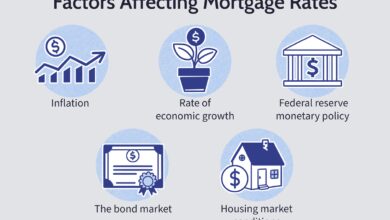
To make accurate daily mortgage rate predictions, analysts track a handful of critical economic indicators. These data points signal inflation, economic growth, and consumer confidence—factors that directly impact investor behavior and, by extension, mortgage rates.
Non-Farm Payrolls (NFP) Report
Released on the first Friday of every month by the Bureau of Labor Statistics, the NFP report measures job creation in the U.S. A strong jobs report often leads to higher daily mortgage rate predictions because it suggests a robust economy, which can fuel inflation.
- Higher-than-expected job growth → upward pressure on rates.
- Lower-than-expected growth → potential rate relief.
- Markets often react within minutes of the release.
For instance, in early 2023, a surprise addition of 500,000 jobs caused mortgage rates to spike by 0.25% in a single week. Traders interpreted this as a sign the Fed might keep rates higher for longer.
Consumer Price Index (CPI) and Inflation Data
Inflation is the arch-nemesis of low mortgage rates. When the CPI report shows rising prices, daily mortgage rate predictions often climb in anticipation of tighter monetary policy.
The relationship is straightforward: higher inflation → higher bond yields → higher mortgage rates. The Federal Reserve closely watches CPI data to decide whether to raise, hold, or cut interest rates.
“Core CPI, which excludes food and energy, is often a better predictor of future rate moves than headline inflation.” — Bloomberg Economics
In June 2022, when the CPI surged to 9.1%, 30-year fixed mortgage rates jumped above 5.7%, the highest level in over a decade. You can track the latest CPI data via the Bureau of Labor Statistics.
Federal Reserve Meetings and Statements
While the Fed doesn’t set mortgage rates directly, its decisions on the federal funds rate heavily influence them. Daily mortgage rate predictions often swing in the days leading up to and following FOMC meetings.
- Hawkish tone (anti-inflation) → higher rate predictions.
- Dovish tone (pro-growth) → lower or stable predictions.
- Even subtle wording changes in the Fed’s statement can trigger market moves.
For example, in March 2024, when Chair Jerome Powell said inflation was “sticky but manageable,” mortgage rates dipped by 0.10% the next day. The Federal Reserve’s official website publishes meeting calendars, statements, and transcripts—essential reading for serious rate watchers.
How Mortgage Rates Are Actually Determined
Many people assume the Federal Reserve sets mortgage rates, but that’s a myth. The Fed controls the federal funds rate, which affects short-term borrowing. Mortgage rates, however, are set by the secondary mortgage market—where loans are bought and sold as investments.
The Secondary Mortgage Market Explained
When you get a mortgage, your lender often sells it to investors or government-sponsored enterprises (GSEs) like Fannie Mae or Freddie Mac. These entities package thousands of loans into mortgage-backed securities (MBS), which are then traded on financial markets.
The price of MBS determines mortgage rates. When demand for MBS is high, lenders can offer lower rates. When demand drops, rates rise to attract investors. This is why daily mortgage rate predictions are so sensitive to bond market activity.
“Mortgage rates are set in the bond market, not the bank.” — The Mortgage Reports
Understanding this mechanism helps explain why rates can change multiple times in a single day, even without major news. Traders are constantly adjusting MBS prices based on risk, yield, and economic expectations.
The Impact of Mortgage-Backed Securities (MBS)
MBS are the backbone of the U.S. mortgage system. Their performance directly influences daily mortgage rate predictions because lenders must price loans to remain profitable when selling them to investors.
- When MBS yields rise, lenders increase mortgage rates to maintain spreads.
- When MBS prices fall (yields rise), mortgage rates follow.
- Global demand for U.S. MBS affects domestic rates.
In 2020, during the pandemic, the Fed bought massive amounts of MBS to stabilize the market, which helped keep mortgage rates near historic lows. Today, as the Fed reduces its balance sheet, the opposite effect is being felt.
Lender Overhead and Profit Margins
Beyond market forces, lenders also factor in their own costs and profit goals. While competition keeps margins tight, operational expenses, credit risk, and loan processing fees all contribute to the final rate offered to borrowers.
For example, a small regional bank may charge a slightly higher rate than a national lender due to lower volume and higher overhead. This is why shopping around is critical—even if daily mortgage rate predictions suggest a national average of 6.5%, your actual offer could vary by 0.25% or more.
Tools and Resources for Tracking Daily Mortgage Rate Predictions
Staying informed is half the battle. Fortunately, numerous tools provide real-time data and expert analysis on daily mortgage rate predictions. Whether you’re a first-time homebuyer or a seasoned investor, these resources can help you make smarter decisions.
Freddie Mac’s Weekly Survey
The Freddie Mac Primary Mortgage Market Survey is the gold standard for mortgage rate data. Released every Thursday, it tracks the average rate for 30-year fixed-rate mortgages across the U.S.
- Based on surveys of lenders nationwide.
- Reflects rates offered to borrowers with strong credit.
- Used by media and economists as a benchmark.
While it’s not daily, it provides a reliable weekly anchor for evaluating short-term trends. Comparing today’s rate to last week’s can reveal whether daily mortgage rate predictions are trending up or down.
Mortgage News Daily and Rate Aggregators
For real-time updates, sites like Mortgage News Daily and Bankrate offer daily rate estimates, expert commentary, and predictive models.
These platforms aggregate data from hundreds of lenders and use algorithms to forecast rate movements. They often include:
- Daily rate trends and charts.
- Analysis of economic events.
- Personalized rate quotes based on your profile.
Many also send email alerts when rates hit certain thresholds—ideal for buyers waiting for a dip.
Financial News Platforms and Market Data
Major financial news outlets like CNBC, Bloomberg, and Reuters provide live coverage of bond markets and economic data, both of which influence daily mortgage rate predictions.
Watching the 10-year Treasury yield in real time can give you a heads-up on mortgage rate movements. For example, if the yield jumps from 4.2% to 4.4% in a morning session, expect mortgage rates to follow suit by afternoon.
“The bond market is the best leading indicator for mortgage rates.” — CNBC Financial Analyst
Using platforms like TradingView or Investing.com, you can set up alerts for key indicators and stay ahead of the curve.
How to Use Daily Mortgage Rate Predictions to Your Advantage
Knowing the rate is one thing—using that knowledge strategically is another. Daily mortgage rate predictions aren’t just for economists; they’re powerful tools for borrowers, refinancers, and investors.
Timing Your Home Purchase or Refinance
If you’re planning to buy a home or refinance, timing can save you thousands. By monitoring daily mortgage rate predictions, you can identify windows of opportunity when rates dip.
- Lock in your rate when predictions suggest an upcoming rise.
- Delay closing if a rate drop is expected in the next few days.
- Use rate locks (typically 30-60 days) to secure a favorable rate.
For example, in early 2023, rates dropped from 7.2% to 6.7% over three weeks due to cooling inflation. Borrowers who waited saved over $100 per month on a $300,000 loan.
Understanding Rate Locks and Float-Down Options
A rate lock protects you from rate increases between loan approval and closing. Most locks last 30 to 60 days and may come with a fee. Some lenders offer “float-down” options, allowing you to benefit if rates drop during the lock period.
When daily mortgage rate predictions suggest volatility, a float-down can be worth the extra cost. However, not all lenders offer this feature, so ask early in the process.
“A rate lock is insurance against rising rates, but a float-down is a chance to profit from falling ones.” — NerdWallet
Be aware that extending a lock period often incurs fees, so align your closing timeline carefully with market expectations.
Shopping Around Based on Predictive Trends
Daily mortgage rate predictions should inform your lender shopping strategy. If rates are expected to rise, don’t wait—get quotes now. If a drop is predicted, you might delay applications to see if offers improve.
Always compare at least three lenders. Even if national averages suggest 6.5%, one lender might offer 6.3% based on your credit, down payment, and loan type. Use online comparison tools to streamline the process.
Common Myths About Daily Mortgage Rate Predictions
With so much noise in the financial media, it’s easy to fall for misconceptions about how mortgage rates work. Let’s debunk some of the most persistent myths.
Myth: The Fed Sets Mortgage Rates
As mentioned earlier, the Federal Reserve controls the federal funds rate, not mortgage rates. While the two are related, mortgage rates are determined by the bond market. The Fed’s actions influence investor expectations, but they don’t dictate your loan’s interest rate.
For example, in 2020, the Fed cut rates to near zero, but mortgage rates didn’t fall instantly—they dropped gradually as the bond market responded to stimulus measures.
Myth: Rates Move the Same Way Every Day
Daily mortgage rate predictions can be erratic. Rates might rise Monday and Wednesday but fall Tuesday and Thursday, even without major news. This is due to market psychology, technical trading, and global capital flows.
- Some days see minimal movement (±0.01%).
- Others see swings of 0.25% or more.
- Weekends and holidays often have stale quotes.
Never assume rates move in a straight line. Use averages over several days to spot real trends.
Myth: All Borrowers Get the Same Rate
Daily mortgage rate predictions usually reflect the average for borrowers with excellent credit (740+), 20% down, and strong income. If your credit is lower or you’re making a smaller down payment, your actual rate will likely be higher.
For instance, a borrower with a 620 credit score might pay 7.5% when the national average is 6.5%. Always get personalized quotes—don’t rely solely on headlines.
Future Outlook: What’s Next for Daily Mortgage Rate Predictions?
Looking ahead, daily mortgage rate predictions will remain volatile as the economy navigates inflation, labor markets, and global uncertainty. However, several trends are likely to shape the next 12–18 months.
Projected Rate Trends for 2024–2025
Most economists expect mortgage rates to moderate in late 2024 and 2025, assuming inflation continues to cool and the Fed begins cutting rates.
- Q3 2024: Rates may dip to 6.0%–6.4%.
- Q1 2025: Potential drop to 5.5%–5.8% if Fed cuts begin.
- Upside risks remain if inflation rebounds.
According to the Federal Housing Finance Agency (FHFA), a gradual decline is more likely than a sudden plunge, giving buyers a window to act.
The Impact of Global Economic Forces
U.S. mortgage rates don’t exist in a vacuum. Global demand for safe assets, central bank policies abroad, and geopolitical tensions all play a role.
For example, if European or Asian investors seek U.S. bonds during a crisis, increased demand can lower yields and, by extension, mortgage rates. Conversely, if the U.S. dollar weakens, foreign investors may pull back, pushing rates up.
“In an interconnected world, a crisis in Taiwan or Germany can affect your mortgage rate in Texas.” — Wall Street Journal
Monitoring global bond yields and currency markets can provide additional context for daily mortgage rate predictions.
Technological Advances in Rate Forecasting
AI and machine learning are revolutionizing how daily mortgage rate predictions are made. Fintech companies now use predictive algorithms that analyze thousands of data points—from social media sentiment to shipping costs—to forecast rate movements with greater accuracy.
Platforms like Zillow and Redfin already offer rate trend alerts powered by AI models. As these tools improve, borrowers will have even more precise timing insights.
What are daily mortgage rate predictions based on?
Daily mortgage rate predictions are based on movements in the bond market, particularly the 10-year Treasury yield and mortgage-backed securities (MBS). They also factor in economic data like inflation (CPI), employment (NFP), and Federal Reserve policy statements. Investor sentiment and global market conditions further influence daily fluctuations.
Do daily mortgage rate predictions affect my personal rate?
Yes, but indirectly. National predictions reflect average rates for borrowers with strong credit. Your personal rate will depend on your credit score, loan type, down payment, and lender pricing. However, when daily predictions rise, all borrowers typically see higher offers.
How often do mortgage rates change during the day?
Mortgage rates can change multiple times a day, especially during periods of high market volatility. Lenders may adjust their rates 1–3 times daily based on MBS trading. Some even update hourly during major economic releases.
Should I lock my rate if predictions suggest a rise?
Yes, if you’re close to closing and daily mortgage rate predictions indicate an upward trend, locking your rate is a smart move. A rate lock protects you from increases during the loan process. Consider a float-down option if you want to benefit from potential drops.
Where can I find reliable daily mortgage rate predictions?
Reliable sources include Freddie Mac’s weekly survey, Mortgage News Daily, Bankrate, and financial news platforms like Bloomberg and CNBC. For real-time data, monitor the 10-year Treasury yield and MBS prices through trading platforms like TradingView.
Daily mortgage rate predictions are a vital tool for anyone navigating the housing market. They’re shaped by a complex mix of economic data, bond market dynamics, and global forces. While no one can predict rates with perfect accuracy, understanding the key drivers—like the 10-year Treasury yield, inflation reports, and Fed policy—can help you make smarter financial decisions. Whether you’re buying, refinancing, or just watching, staying informed through trusted sources and using tools like rate locks can save you money and reduce stress. As we move into 2024 and beyond, expect continued volatility—but also opportunities for those who watch the trends closely.
Further Reading: