Thinking about buying a home in 2025? The 2025 mortgage rate forecast could make or break your plans. Experts are divided, but one thing is clear: volatility is here to stay. Let’s break down what you need to know.



Understanding the 2025 Mortgage Rate Forecast: What Experts Are Saying

The 2025 mortgage rate forecast has become a hot topic among economists, real estate analysts, and homebuyers alike. With inflation, Federal Reserve policy, and global economic trends in flux, predicting mortgage rates for 2025 is no simple task. However, major financial institutions and housing market analysts have begun releasing their projections, offering a range of possible outcomes.
Key Institutions and Their 2025 Projections
Several leading organizations have weighed in on the 2025 mortgage rate forecast. The Mortgage Bankers Association (MBA), Freddie Mac, and Fannie Mae have all published outlooks based on current economic data and anticipated policy shifts. According to the Mortgage Bankers Association, the average 30-year fixed mortgage rate could settle around 6.1% by the end of 2025, down slightly from 2024’s peak.
- Freddie Mac predicts a gradual decline, with rates averaging 5.8% in 2025.
- Fannie Mae’s Economic & Strategic Research Group forecasts a median rate of 6.3%.
- The Conference Board suggests a more volatile path, with rates fluctuating between 5.5% and 7.0%.
Factors Influencing Expert Predictions
These forecasts are not arbitrary. They are based on macroeconomic indicators such as inflation, employment data, GDP growth, and Federal Reserve monetary policy. For instance, if inflation remains above the Fed’s 2% target, rates are likely to stay elevated. Conversely, a soft landing scenario—where inflation cools without triggering a recession—could pave the way for rate cuts.
“The 2025 mortgage rate forecast hinges on whether the Federal Reserve can achieve a soft landing,” says Mike Fratantoni, Chief Economist at the MBA.
Historical Trends Leading to the 2025 Mortgage Rate Forecast
To understand where mortgage rates might go in 2025, it’s essential to look back at historical patterns. Mortgage rates have fluctuated dramatically over the past two decades, influenced by economic cycles, housing bubbles, and global crises.
The 2008 Financial Crisis and Its Aftermath
Following the 2008 financial collapse, the Federal Reserve slashed interest rates to near-zero levels and launched quantitative easing programs. This led to historically low mortgage rates, with the 30-year fixed rate averaging below 4% from 2011 to 2019. These ultra-low rates fueled a housing recovery but also contributed to rising home prices.
- 2012: 3.35% average mortgage rate
- 2016: 3.65% average mortgage rate
- 2020: 3.11% average mortgage rate
The Post-Pandemic Surge in Rates
The pandemic triggered another round of monetary easing, pushing rates to an all-time low of 2.65% in January 2021. However, as inflation surged in 2022 due to supply chain disruptions and fiscal stimulus, the Fed began aggressively raising rates. By late 2023, the 30-year fixed mortgage rate had climbed above 8%, the highest level in over two decades.
“We haven’t seen rates this high since the early 1980s,” notes Greg McBride, Chief Financial Analyst at Bankrate.
Key Economic Drivers Behind the 2025 Mortgage Rate Forecast
The 2025 mortgage rate forecast is not shaped in a vacuum. It’s the result of complex interactions between domestic and global economic forces. Understanding these drivers is crucial for anyone planning to buy, sell, or refinance a home in the coming years.
Inflation and the Federal Reserve’s Role
Inflation is the single most influential factor in the 2025 mortgage rate forecast. The Federal Reserve targets a 2% inflation rate and uses the federal funds rate as its primary tool to control price growth. When inflation is high, the Fed raises rates to cool spending and borrowing. When inflation is low or negative, it cuts rates to stimulate the economy.
- Core PCE inflation (the Fed’s preferred measure) was 2.8% in Q4 2023.
- If inflation falls to 2.2% by mid-2025, the Fed may begin cutting rates.
- Persistent inflation above 3% could delay rate cuts into 2026.
Employment and Wage Growth
A strong labor market tends to keep inflation elevated, as higher wages increase consumer spending. The U.S. unemployment rate was 3.7% in late 2023, near historic lows. If job growth remains robust and wage inflation stays above 4%, the Fed may hesitate to cut rates, affecting the 2025 mortgage rate forecast.
“Tight labor markets are a double-edged sword—they support economic growth but also fuel inflation,” explains Julia Coronado, founder of MacroPolicy Perspectives.
Impact of Federal Reserve Policy on the 2025 Mortgage Rate Forecast
The Federal Reserve doesn’t set mortgage rates directly, but its policies have a profound influence. The Fed’s decisions on the federal funds rate, balance sheet reduction, and forward guidance all ripple through the bond market, which in turn affects mortgage-backed securities (MBS) and home loan rates.
Interest Rate Cuts and Their Timing
Market expectations for Fed rate cuts in 2025 are a major component of the 2025 mortgage rate forecast. Futures markets, as tracked by the CME Group’s FedWatch Tool, suggest a 60% chance of at least one rate cut by Q2 2025 and a potential for three cuts by year-end, depending on inflation data.
- Each 25-basis-point Fed cut could reduce mortgage rates by 15–20 basis points.
- Delayed cuts due to sticky inflation could keep mortgage rates above 6.5%.
- Earlier-than-expected cuts could bring rates down to 5.5% or lower.
Quantitative Tightening and Bond Yields
The Fed’s balance sheet reduction—known as quantitative tightening (QT)—has also contributed to higher mortgage rates. By selling off mortgage-backed securities, the Fed has reduced demand in the MBS market, pushing yields up. If QT slows or ends in 2025, it could ease downward pressure on mortgage rates.
“The end of QT could be a quiet catalyst for lower mortgage rates in 2025,” says Matthew Martin, economist at Pantheon Macroeconomics.
Housing Market Conditions and the 2025 Mortgage Rate Forecast
The state of the housing market plays a critical role in shaping the 2025 mortgage rate forecast. Supply constraints, buyer demand, and affordability all interact with interest rates to determine market dynamics.
Inventory Levels and Home Prices
Low housing inventory has been a persistent issue since 2020. With fewer homes available, competition among buyers remains fierce, supporting higher prices. In 2023, the median existing-home price was $410,000, up 3.5% year-over-year. If inventory doesn’t improve, even moderate mortgage rates could strain affordability.
- National Association of Realtors (NAR) reports just 3.3 months of supply—well below the 6-month benchmark for a balanced market.
- New construction is rising but still insufficient to meet demand.
- High prices may force first-time buyers to delay purchases, reducing demand pressure.
Buyer Affordability and Demand Shifts
Affordability has plummeted due to the combination of high prices and elevated rates. The monthly payment on a $400,000 home at 7% is over $1,000 higher than at 3%. This has led to a decline in home sales, particularly among first-time buyers. If the 2025 mortgage rate forecast includes a drop to 5.5–6%, demand could rebound significantly.
“Affordability is the biggest barrier to homeownership today,” says Lawrence Yun, Chief Economist at NAR.
Regional Variations in the 2025 Mortgage Rate Forecast
Mortgage rates are national, but their impact varies widely by region. Local economic conditions, housing supply, and income levels all influence how the 2025 mortgage rate forecast plays out across the U.S.
High-Cost Markets: California, New York, and Washington, D.C.
In high-cost areas, even small changes in mortgage rates have outsized effects. A 1% increase in rates on a $1 million home adds over $600 to the monthly payment. In cities like San Francisco and Manhattan, where median prices exceed $1.2 million, buyers are especially rate-sensitive. A favorable 2025 mortgage rate forecast could reignite demand in these markets.
- Bay Area homebuyers are waiting for rates to drop below 6%.
- New York City saw a 20% drop in sales volume in 2023 due to high rates.
- Washington, D.C. market remains stable due to federal employment.
Affordable Markets: Midwest and Sun Belt
Regions like the Midwest and Sun Belt (e.g., Texas, Florida, Tennessee) offer more affordable housing and stronger population growth. These areas may see less sensitivity to rate changes. In fact, some Sun Belt markets could experience price appreciation even with rates above 6%, due to continued migration and job growth.
“The Sun Belt is still the growth engine of U.S. housing,” says Ali Wolf, Chief Economist at Zonda.
Strategies for Homebuyers in Light of the 2025 Mortgage Rate Forecast
Whether you’re planning to buy in 2025 or just monitoring the market, understanding the 2025 mortgage rate forecast can help you make smarter financial decisions. Here are actionable strategies to consider.
Locking In Rates vs. Waiting for Cuts
One of the biggest dilemmas for buyers is whether to lock in a rate now or wait for potential cuts in 2025. While waiting could save money if rates fall, it also carries risk. If inflation rebounds or the economy strengthens unexpectedly, rates could rise again.
- Consider a rate lock with your lender for up to 60 days.
- Use a mortgage rate cap strategy if you expect volatility.
- Monitor CPI and PCE inflation reports for early signals.
Exploring Alternative Loan Options
Traditional 30-year fixed mortgages aren’t the only option. In a high-rate environment, alternatives like adjustable-rate mortgages (ARMs), FHA loans, or piggyback loans can offer advantages.
- 5/1 ARMs may offer initial rates 1–1.5% lower than fixed loans.
- FHA loans allow lower down payments (3.5%) and more lenient credit standards.
- Piggyback loans (80/10/10) can avoid PMI and reduce effective borrowing costs.
“In a 6%+ rate environment, creative financing can save tens of thousands,” advises Danilo Diazgranados, Senior VP at NAR.
Refinancing Opportunities Based on the 2025 Mortgage Rate Forecast
For existing homeowners, the 2025 mortgage rate forecast could open doors to refinancing. If rates decline from 2023–2024 highs, many borrowers could save significantly on their monthly payments.
When to Consider Refinancing
The general rule of thumb is to refinance when you can lower your rate by at least 0.75%. With average rates above 7% in 2023, a drop to 6% or below in 2025 could make refinancing worthwhile for millions.
- Calculate your break-even point: divide closing costs by monthly savings.
- Consider refinancing if you plan to stay in your home for at least 3–5 years.
- Explore no-closing-cost refinance options for short-term savings.
Impact of Home Equity and Credit Score
Your ability to refinance at favorable rates in 2025 will depend on your home equity and credit score. Borrowers with high equity (70%+ LTV) and excellent credit (740+) will qualify for the best rates.
“Refinancing is not one-size-fits-all. Your financial profile matters as much as the rate environment,” says Tendayi Kapfidze, Chief Economist at LendingTree.
Expert Predictions and Scenarios for the 2025 Mortgage Rate Forecast
Given the uncertainty, experts have outlined several plausible scenarios for the 2025 mortgage rate forecast. These range from optimistic to pessimistic, depending on economic performance.
Base Case: Gradual Decline to 5.8–6.2%
The most widely accepted scenario is a gradual decline in mortgage rates as inflation cools and the Fed begins cutting rates. This assumes a soft landing, with GDP growth around 1.5–2% and unemployment rising slightly to 4.2%.
- Q1 2025: 6.5%
- Q2 2025: 6.2%
- Q3 2025: 6.0%
- Q4 2025: 5.8%
Bull Case: Rapid Cuts to 5.0–5.5%
If inflation falls faster than expected and the Fed cuts rates aggressively, mortgage rates could drop below 5.5% by late 2025. This scenario could trigger a refinancing boom and a surge in home sales.
“A disinflationary shock could bring rates down quickly,” says Mohamed El-Erian, Chief Economic Advisor at Allianz.
Bear Case: Sticky Inflation Keeps Rates Above 7%
If inflation proves persistent due to geopolitical tensions, wage pressures, or supply chain issues, the Fed may keep rates high. In this scenario, mortgage rates could remain above 7%, further depressing affordability and home sales.
- 2025 average: 7.2%
- Refinancing volume drops by 40%
- Homeownership rate declines for the first time since 2020
What is the 2025 mortgage rate forecast?
The 2025 mortgage rate forecast varies by institution, but most predict a range between 5.5% and 6.5% for the 30-year fixed rate. The actual outcome will depend on inflation, Fed policy, and economic growth.
Will mortgage rates go down in 2025?
Most experts believe mortgage rates will decline in 2025 if inflation continues to cool and the Federal Reserve begins cutting interest rates. However, the timing and magnitude of cuts remain uncertain.
Should I wait to buy a house in 2025?
It depends on your financial situation and local market. If you’re ready to buy and find a home you love, waiting for lower rates carries risk. Rates could fall, but they could also rise if inflation rebounds.
Can I refinance my mortgage in 2025?
Yes, if rates drop significantly from 2023–2024 levels. Homeowners with high-rate loans should monitor the 2025 mortgage rate forecast and consider refinancing when rates fall by at least 0.75%.
What factors affect the 2025 mortgage rate forecast?
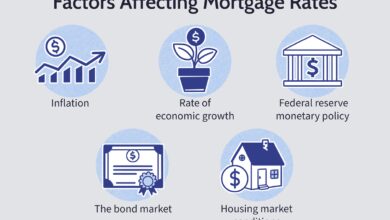
Key factors include inflation, Federal Reserve policy, employment data, bond market yields, housing supply, and global economic conditions. All play a role in shaping the 2025 mortgage rate forecast.
The 2025 mortgage rate forecast is a critical piece of the housing puzzle. While uncertainty remains, most experts agree that rates will likely decline from recent highs, offering hope to buyers and homeowners alike. Whether you’re planning to purchase, refinance, or simply stay informed, understanding the forces behind the forecast—like inflation, Fed policy, and market dynamics—can help you make smarter financial decisions. By staying informed and preparing for multiple scenarios, you can navigate the evolving landscape with confidence.
Further Reading: